
In the evolving landscape of supply chain management, automation has emerged as a pivotal trend reshaping the industry’s contours. As businesses strive to enhance efficiency and adaptability, the integration of advanced automated systems stands at the forefront of delivering competitive advantages.
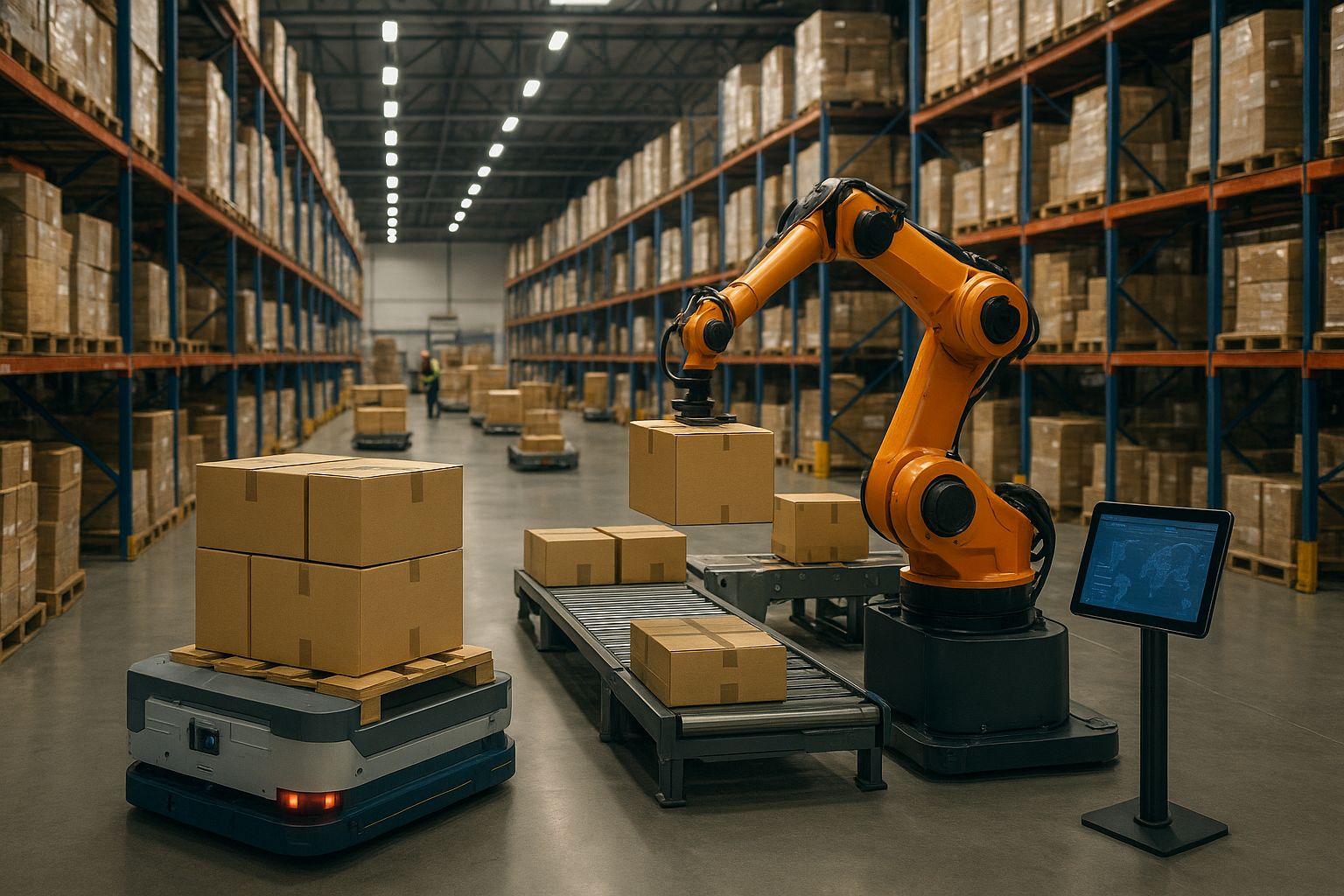
Recently, the influence of robotics and process automation has been instrumental in reducing operational costs. Large-scale distribution centers, for instance, have increasingly adopted Automated Guided Vehicles (AGVs) and robotics to manage high-velocity operations with remarkable precision. Companies like Amazon and Walmart have set benchmarks in this regard, effectively increasing throughput while minimizing human error.
A notable aspect of this automation wave is the integration of Internet of Things (IoT) technologies, which offers real-time data and insights. By embedding sensors in logistics components, businesses are gaining real-time visibility into their inventory, enabling predictive analytics to anticipate demand fluctuations and mitigate risks inherent to supply chain disruptions. IoT-driven data analytics facilitate not only the streamlined flow of goods but also ensure proactive maintenance protocols, reducing downtimes.
Furthermore, Artificial Intelligence (AI) and Machine Learning (ML) are becoming integral, allowing for adaptive learning from historical data. These technologies enable predictive forecasting and intelligent resource allocation, which are critical for meeting ever-evolving consumer expectations. Firms deploying AI-driven software solutions are equipped to optimize route planning and inventory management, thus safeguarding robust supply chain networks.
The strategic embrace of cloud-based systems forms another automation trend gaining momentum. Cloud solutions provide seamless coordination across global supply chains by ensuring that stakeholders have access to unified, up-to-date information. This aspect not only fortifies decision-making processes but also bolsters supply chain resilience against unforeseen disruptions. Enterprise Resource Planning (ERP) systems often integrate these cloud systems, promoting cohesive operational environments across various layers of supply chains.
Despite technological advances, challenges such as cybersecurity threats pose significant hurdles. As supply chains become more digital, the risk of cyber intrusions intensifies. Implementing stringent cybersecurity measures and regular audits is thus indispensable to protect sensitive data and preserve trust among stakeholders.
Overall, the drive toward automation in supply chain management has underscored the importance of robust digital infrastructures. By aligning strategy with cutting-edge technologies, companies are not merely optimizing their operations; they are future-proofing their supply chains against the uncertainties of tomorrow’s market.