

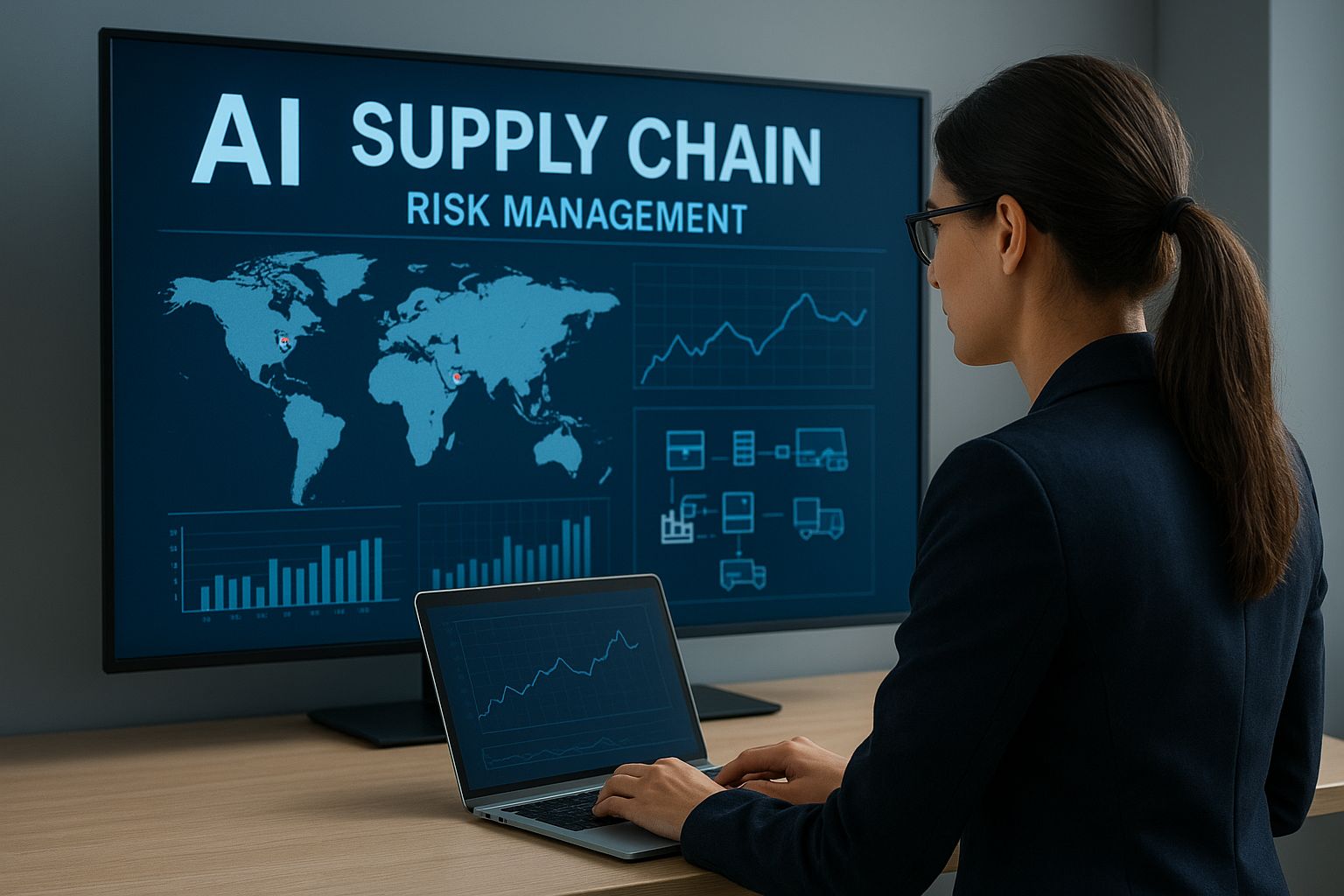
Artificial Intelligence (AI) continues to revolutionize supply chain management, particularly in the domain of risk management. As businesses increasingly rely on global suppliers, the complexity of supply chains has expanded, making risk management a critical concern. AI offers a powerful tool to address this issue by enhancing predictive capabilities, automating processes, and improving decision-making.
Supply chain risk management has traditionally been reactive, with companies dealing with disruptions as they occur. However, the current trend is shifting towards a proactive approach, driven by AI’s ability to analyze vast amounts of data and anticipate potential disruptions before they materialize. This shift is particularly important in an era where global supply chains face unprecedented challenges, including geopolitical tensions, natural disasters, and pandemics.
One of the most significant benefits of AI in risk management is its predictive analytics capabilities. AI algorithms can analyze historical data and identify patterns that could indicate future risks. For instance, AI can forecast potential supplier failures by analyzing data such as financial reports, historical reliability, and performance metrics. Additionally, AI can monitor external data sources like news outlets and social media to provide real-time alerts on geopolitical risks or natural disasters.
Automation is another crucial aspect of AI in supply chain risk management. AI can streamline and automate routine risk management tasks, such as supplier audits and compliance checks. This automation not only reduces the burden on human resources but also enhances accuracy by eliminating human error in these repetitive tasks.
Moreover, AI-powered decision-making tools provide supply chain managers with insights that are more comprehensive and accurate than traditional methods. By integrating data from various sources, AI systems can offer actionable insights into potential risks and suggest mitigation strategies. This empowers managers to make informed decisions that minimize disruptions and enhance supply chain resilience.
A notable example of AI’s impact is in the automotive sector, where companies are utilizing AI-driven tools to foresee and mitigate supply chain risks. By leveraging AI, these companies can ensure a steady flow of essential components, such as semiconductors, which are critical to their manufacturing processes.
Despite the clear benefits, there are challenges to AI integration, including data privacy concerns and the need for significant investments in technology and training. However, as AI technology evolves, these challenges are gradually being addressed, making AI an increasingly accessible and indispensable tool for supply chain risk management.
Given these advancements, it is evident that the role of AI in supply chain risk management is not just a trend but a necessity for forward-thinking businesses. As AI continues to develop, companies that leverage its capabilities will gain a competitive edge by ensuring smoother and more resilient supply chains.