

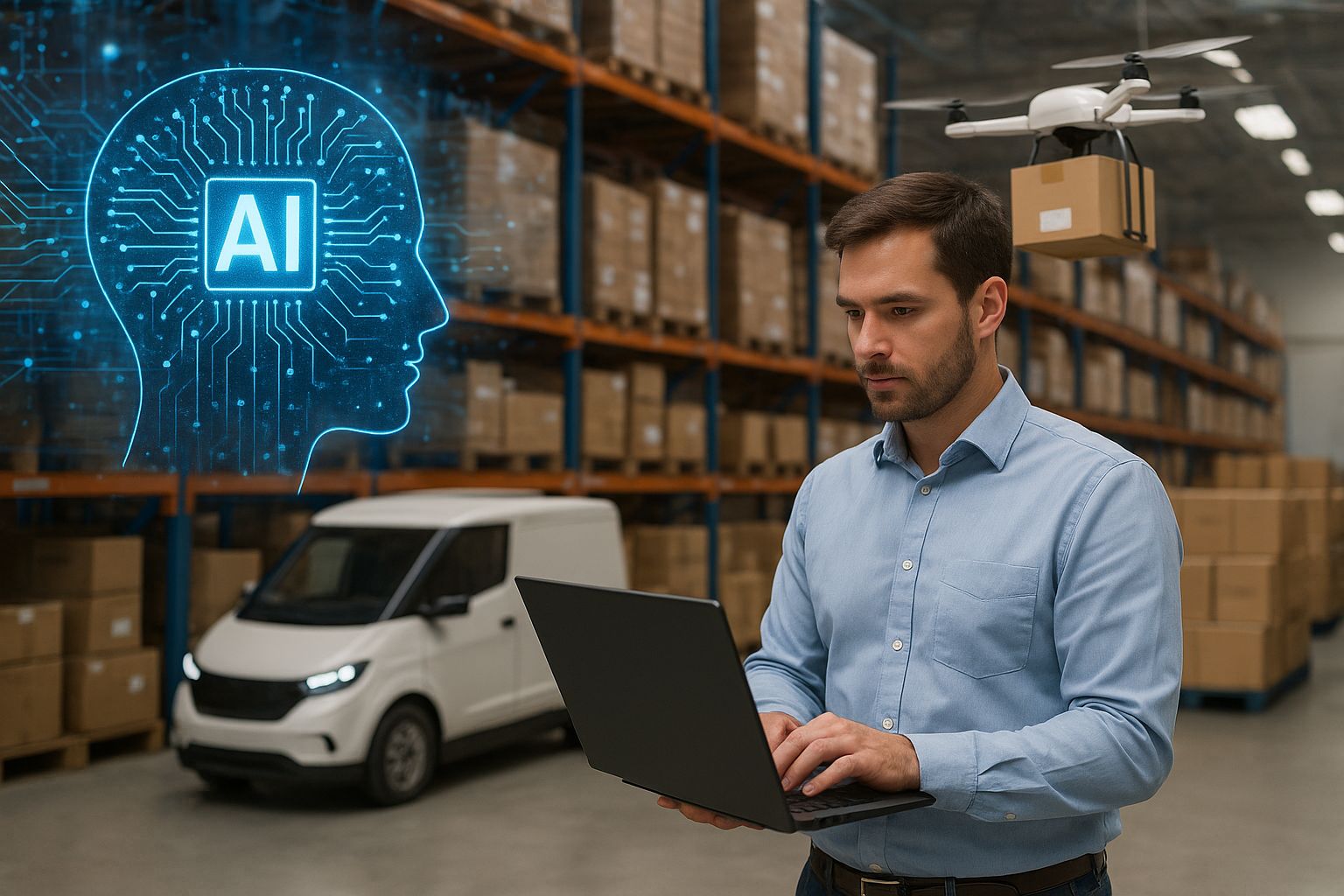
Artificial Intelligence (AI) is revolutionizing supply chain management, transforming traditional practices into dynamic and agile processes. With the growing complexity of global supply networks, AI-driven solutions are increasingly becoming indispensable in optimizing supply chain operations.
One significant advantage AI offers is its ability to enhance demand forecasting. Companies like Amazon and Walmart are utilizing machine learning algorithms to analyze vast datasets, predicting consumer demand with impressive accuracy. These predictive insights allow for more efficient inventory management, reducing both overstock and stockouts, which in turn optimizes capital allocation and enhances customer satisfaction.
Moreover, AI is playing a critical role in logistics and transportation. Autonomous vehicles and drones, for instance, are being tested to deliver goods more swiftly and safely. Firms such as UPS and FedEx are investing in AI technologies to streamline their routing algorithms. By analyzing traffic patterns and weather conditions in real-time, these companies are able to optimize delivery routes, leading to significant cost savings and reductions in delivery times.
AI’s potential in supply chain management extends to quality control and risk management. Using AI-powered image recognition, companies can now automate the inspection processes, ensuring products meet specific quality standards before they reach the consumer. This not only mitigates the risk of recalls and returns but also upholds consumer trust and brand reputation.
Furthermore, AI is enhancing supplier relationship management. By analyzing and predicting supplier performance through intelligent data analytics, businesses can identify potential risks early on and make informed decisions to ensure supply chain continuity. This capability is vital in today’s uncertain global market, where geopolitical tensions and pandemics can disrupt supply chains unexpectedly.
However, integrating AI into supply chain operations is not without its challenges. Companies must adapt to new technologies and ensure that their workforce is adequately trained to harness AI’s potential. Additionally, data privacy and security remain concerns as the implementation of AI relies heavily on large databases encompassing sensitive information.
Despite these challenges, the trajectory of AI in supply chain management is one of positivity and rapid adaptation. As more businesses recognize the strategic benefits of AI, investing in these technologies will become a necessity rather than a competitive advantage. The future of supply chain management undeniably lies in the synergistic relationship between human expertise and AI technologies, a partnership that promises to drive unprecedented levels of efficiency and innovation in the industry.