

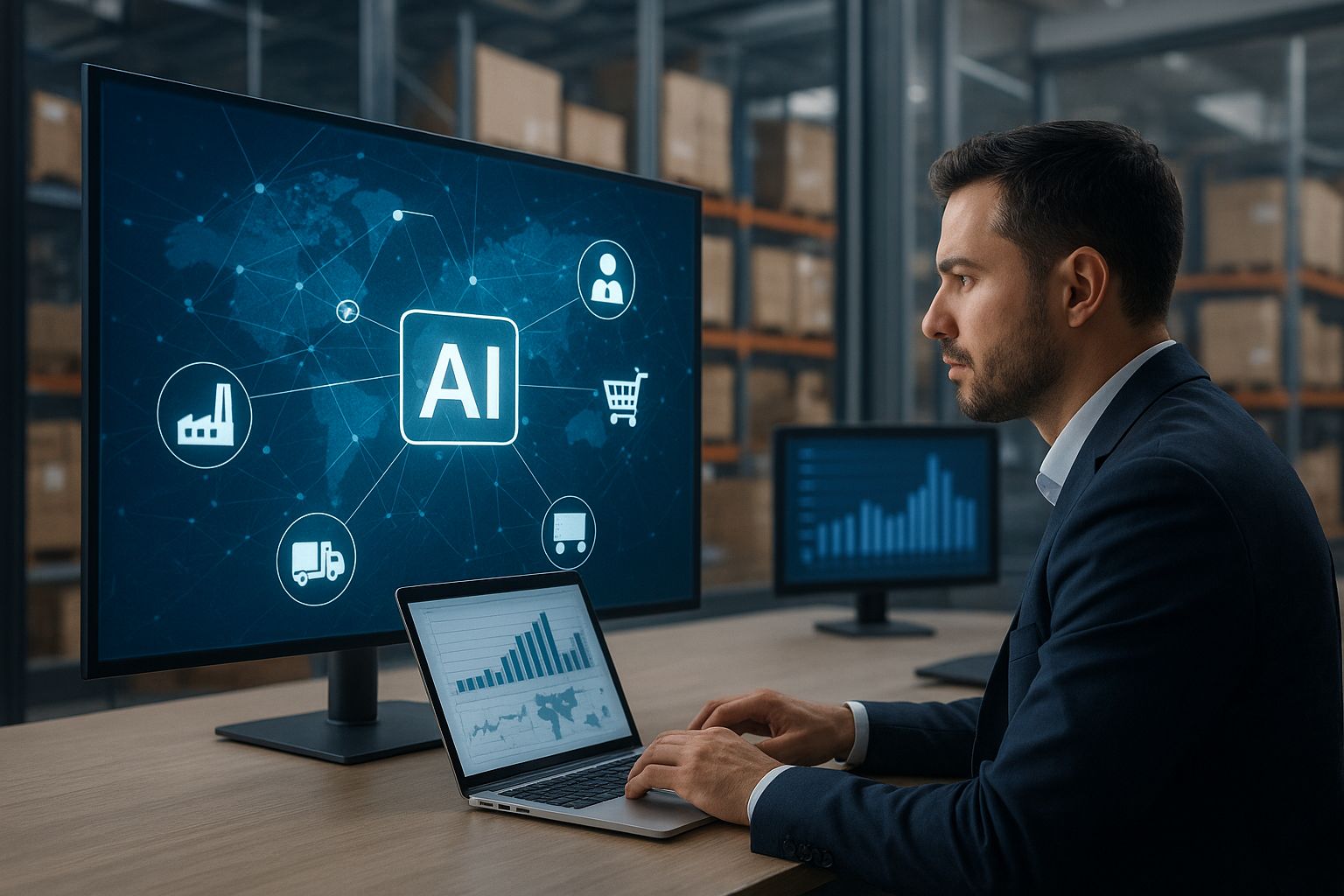
In an era where global supply chains are increasingly complex, the incorporation of artificial intelligence (AI) is heralding a transformative change. Companies worldwide are beginning to recognize AI’s potential to enhance resilience, optimize operations, and forecast demands with unprecedented accuracy.
Traditionally, supply chains relied heavily on human intervention to manage inventory levels, logistics, and demand forecasting. However, recent disruptions such as the COVID-19 pandemic and geopolitical tensions have exposed vulnerabilities in conventional models. Businesses are turning to AI-driven solutions to address these gaps and create more adaptable supply chains.
AI can process enormous datasets with speed and precision, enabling real-time insights that were previously unachievable. For instance, AI-powered predictive analytics can foresee potential disruptions by analyzing patterns and trends across various data points, aiding companies in preemptively adjusting their strategies. This predictive capability is not only invaluable for mitigating risks but also for capitalizing on opportunities within the supply chain.
An exemplary case is IBM’s AI-driven supply chain solutions, which employ machine learning algorithms to enhance inventory management and optimize supply routes. These solutions are designed to learn from past data and adapt to new information, thereby continuously improving their efficiency and reliability.
Moreover, AI’s role in automating repetitive and time-consuming tasks such as order processing and scheduling cannot be understated. Intelligent automation technologies streamline operations, reduce human errors, and free up resources to focus on high-value activities like strategic planning and customer engagement.
Companies deploying AI-based tools are also witnessing remarkable improvements in sustainability. AI helps in continuously monitoring and refining resource use, reducing waste, and supporting more sustainable practices throughout the supply chain. For instance, by leveraging AI to accurately predict demand, companies can minimize overproduction and reduce their carbon footprint.
However, this AI revolution does not come without challenges. Successful implementation often requires substantial investment in technology and training of personnel. Moreover, handling vast amounts of data raises concerns about privacy and security, necessitating robust governance frameworks.
Despite these challenges, industry leaders who have successfully integrated AI into their supply chains are reaping significant benefits. They have not only enhanced their operational resilience but have also set new benchmarks in supply chain efficiency and responsiveness.
As AI technology continues to evolve, its impact on supply chains will only grow more profound. The organizations that embrace this digital transformation early are likely to maintain a competitive edge in a world that demands agility and adaptability.