

The wave of automation is sweeping across industries, and the supply chain sector is no exception. With the constant push towards efficiency and cost-effectiveness, businesses are recognizing the potential of advanced technology solutions to revolutionize their logistics and supply chain operations. This article delves into the latest trends in supply chain automation, shedding light on its transformative impact on the industry.
Automation in supply chain technology revolves around the integration of advanced robotics, artificial intelligence (AI), and machine learning, enabling businesses to streamline their operations. From inventory management and order processing to delivery, automation has permeated multiple stages of the supply chain cycle. For many global corporations, adopting these technologies has moved beyond just a trend—it's now a business imperative.
The importance of automation is underscored by success stories from industry titans. For instance, Amazon, a leader in logistics innovation, employs robots in warehouses to increase efficiency. These robots not only facilitate quicker picking and packing of items but also optimize space utilization, leading to significant savings and a reduction in human error. This approach is now being emulated by other industry players seeking similar gains.
Moreover, the supply chain sector is grappling with unpredictable shifts, as seen with the challenges brought about by global events like the COVID-19 pandemic. Automation has proven crucial in maintaining operations under such volatile conditions. With AI-powered demand forecasting tools, companies are better equipped to anticipate market needs and adjust their supply chain strategies accordingly, ensuring resilience and adaptability.
One cannot overlook the role of data in automation. As supply chain technology evolves, the integration of big data analytics is becoming increasingly important. By analyzing vast amounts of data, automated systems can recognize patterns and anomalies, providing real-time insights for decision-makers. Companies can thus enhance predictive maintenance for equipment, improve inventory turnover rates, and enhance customer satisfaction through more accurate order fulfillment.
As the industry continues to navigate Industry 4.0, the automation of supply chain processes is set to scale new heights. Tools such as IoT devices and blockchain technology are further contributing to enhanced transparency and traceability, fostering trust among stakeholders. These innovations promise to revolutionize supply chains, minimizing disruptions and maximizing efficiency.
For companies yet to embrace automation, the imperative is clear: the time to act is now. As businesses strive for agility and efficiency, those leveraging cutting-edge technology will gain a competitive advantage in an increasingly complex market. The future of supply chains lies in embracing change and preparing for an automated tomorrow.
Estimated reading time: 2 minutes, 9 seconds
The Rise of Automation in Supply Chain Technology Featured
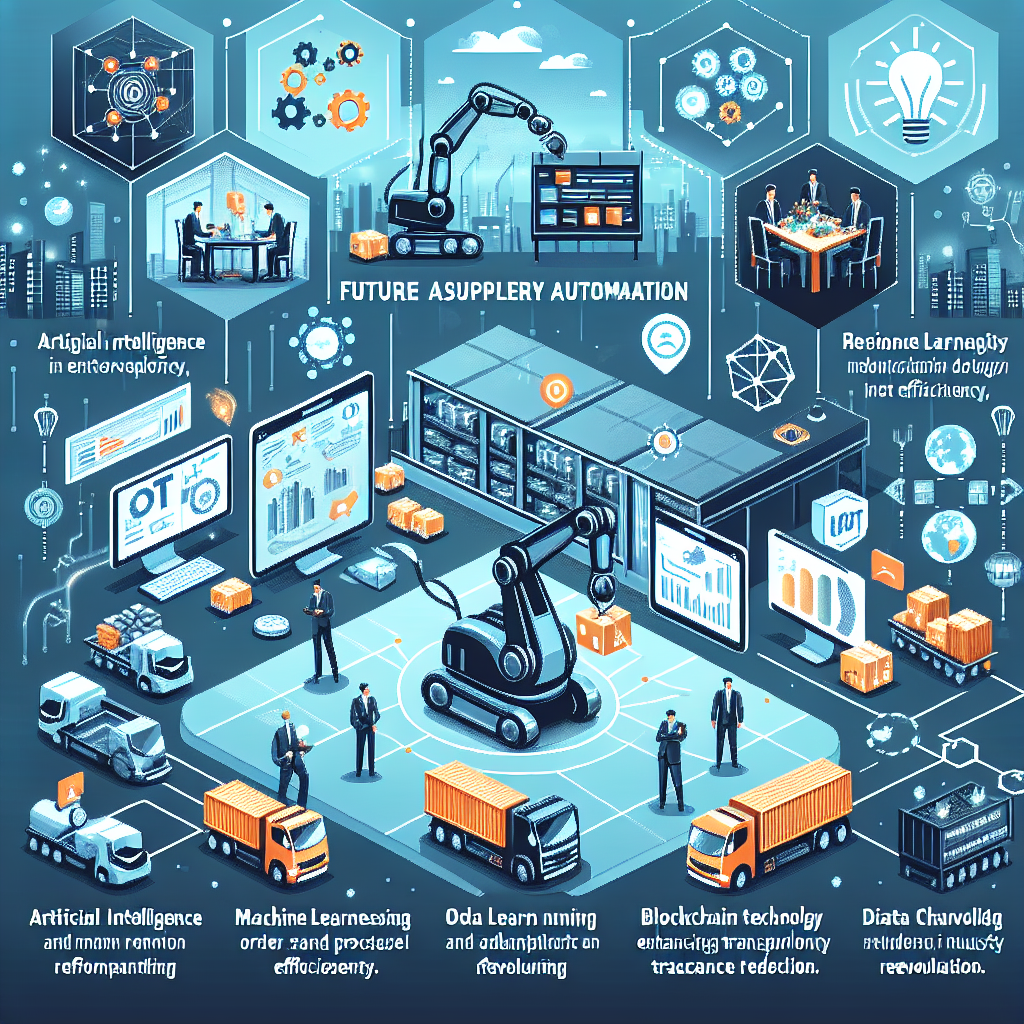 Explore how automation is transforming supply chain technology with advancements in AI and robotics, driving efficiency and revolutionizing logistics.
Latest from SupplyChain Tech News
Most Read
-

-
Feb 17 2012
-
Written by Scott Koegler
 ec-bp.com eCommerce Best Practices for the Supply Chainec-bp was established…
-
-

-
Jul 18 2017
-
Written by Super User
Add us to your Safe Sender list: We want to…
-
-
-
Feb 13 2019
-
Written by Scott Koegler
Every organization that wants to organize and manage their supply…
-
-
-
Feb 13 2013
-
Written by Scott Koegler
EDI Software and Services Providers / EDI Directory This table…
-